
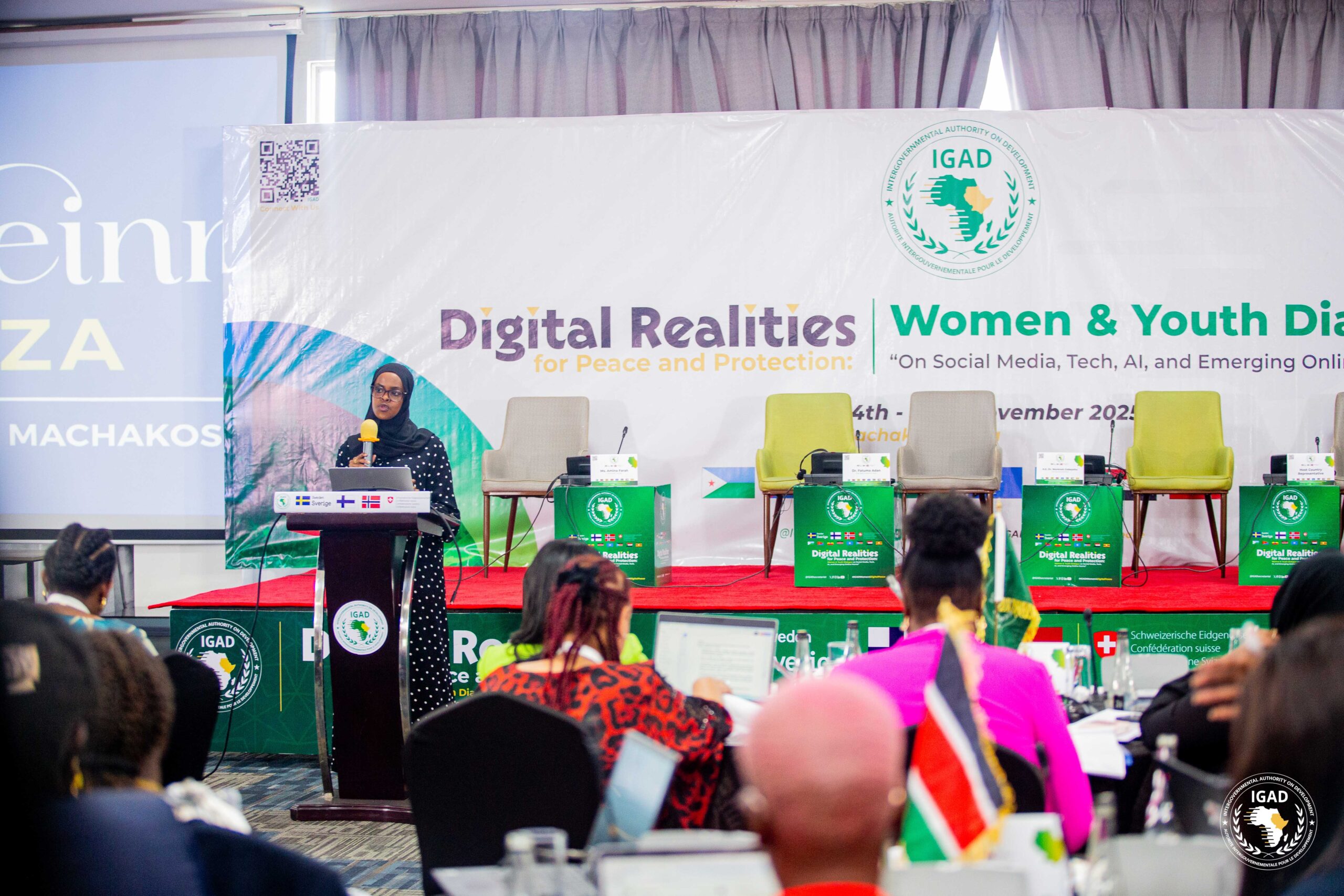
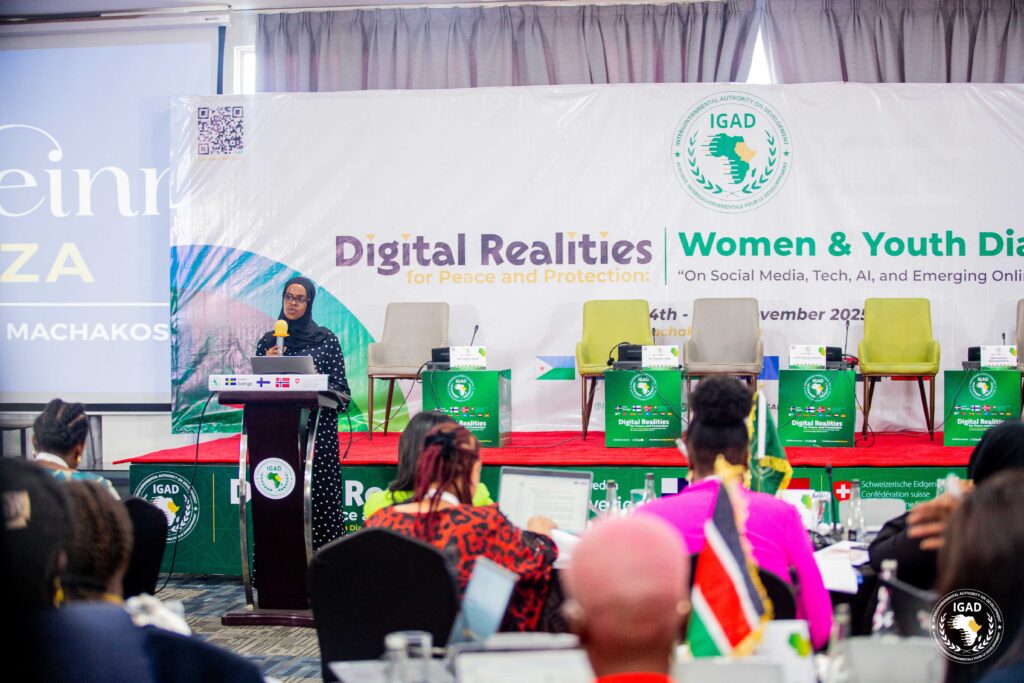
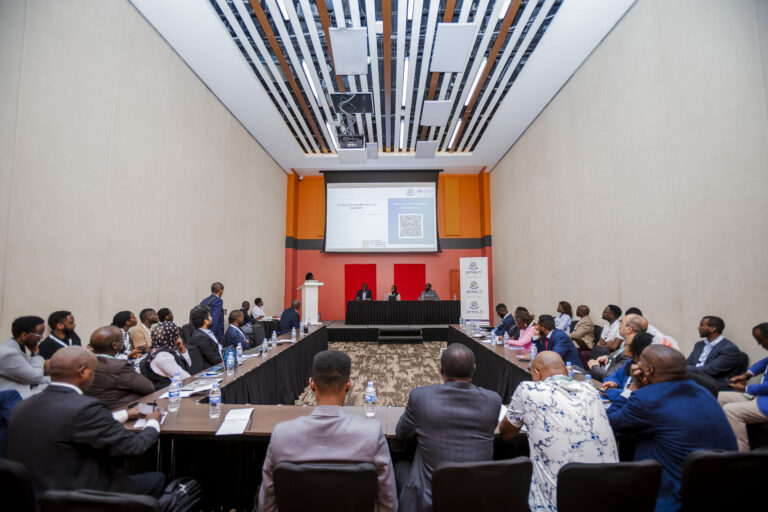
DIFA’s Principal Consultant, Ikran Abdirahman, contributed to the IGAD convening on Digital Realities for Peace and Protection. Her intervention focused on the need to examine AI through a gender sensitive lens, particularly within African contexts where existing digital, economic, and structural inequalities already place women at a disadvantage. As AI systems become more embedded in public services, employment, finance, education, and information ecosystems, there is a real risk that these technologies may reproduce or amplify gender disparities unless deliberate safeguards are put in place.
The session highlighted both the opportunities and risks of AI for gender equality. On the one hand, AI can improve efficiency, expand access to education, and support more inclusive practices, such as tools that promote gender neutral language in recruitment or localised learning platforms. On the other hand, biased training data, under-representation of women in AI development, and weak accountability mechanisms have already led to discriminatory outcomes. These include algorithmic bias and technology facilitated gender-based violence. The discussion emphasised the importance of ethical AI throughout the lifecycle, from data collection and model training to deployment and oversight to properly mitigate these instances of bias.
AI can be a force for social good in the region through stronger policy frameworks, continuous auditing, AI literacy, and meaningful inclusion of women in AI governance and decision making.
 Swahili
  English